PinnedFoundry·July 13, 2026
Foundry and ScottyLabs
Why ScottyLabs runs Foundry.
by Theo Urban·1 min read
The blog
Essays, reflections, and lessons from inside the accelerator.
Why ScottyLabs runs Foundry.
A look into 996 Ventures: Documenting the Obsessed Few
A learning document from the first year of ScottyLabs Foundry
Carnegie Mellon's premier startup accelerator for serious founders.
Carnegie Mellon's First Student-Led Startup Accelerator.
AI is now. Robotics is next.
The most honest benchmark for a frontier model is not a test score. It is what one person can ship in a day.
Every business sitting on rich data is one good decision away from making it useful. The decision is to connect it first.
AI is now. Robotics is next.

I've spent the last year believing a single assumption: this decade belongs to AI. Every founder I talk to is building an AI wrapper, an AI agent, an AI something. Every VC I've matched with has an AI thesis. That's the right call for right now. But I don't think it's the right call for what's next.
I believe the 2030’s belong to robots. And I think Pittsburgh, not San Francisco, is where that decade starts.
I don't need to point at a trend report to make this case. I can point at two companies that are already proving it, both headquartered a few miles from campus.
Gecko Robotics builds climbing, flying, and swimming robots that inspect the infrastructure the rest of the economy quietly depends on: power plants, refineries, aircraft, military assets. Their Cantilever platform takes the data those robots collect and turns it into a live picture of an asset's health, so operators can catch a crack or a corrosion problem before it becomes a headline. It started in 2013 as a college project by Jake Loosararian, an electrical engineering student who'd seen how often power plants went down for preventable reasons. Twelve years later, Gecko raised a $125 million Series D in 2025 that pushed its valuation to roughly $1.25 billion, backed by Cox Enterprises, Founders Fund, and Y Combinator, among others (CNBC). It's now working with the U.S. Air Force, the U.S. Navy, and Abu Dhabi's national oil company. That's not a hypothetical about the future of robotics. That's a Pittsburgh company, already a unicorn, already inside the world's most sensitive infrastructure.
Skild AI is the more direct CMU story. It was founded in 2023 by Deepak Pathak and Abhinav Gupta, two Carnegie Mellon Robotics Institute professors who decided the way to make progress on general-purpose robots wasn't to hand-code a new model for every robot and every task. It was to build one foundation model, the "Skild Brain," that can learn from internet video, simulation, and real-world deployment, then transfer that intelligence across totally different robot bodies, quadrupeds, humanoids, arms, mobile manipulators, without starting from scratch each time. Investors clearly buy the thesis. Skild raised a $1.4 billion Series C in early 2026 led by SoftBank, with Nvidia, Sequoia, Bezos Expeditions, and Lightspeed all participating, at a valuation north of $14 billion (TechCrunch). That's a company built directly out of a CMU lab, at a valuation that puts it in the same conversation as the biggest AI labs in the world.
Two companies. One inspecting the physical world with robots, one trying to give any robot a working brain. Both born in Pittsburgh. Neither is a coincidence.
Carnegie Mellon's Robotics Institute isn't just a strong program. It was the first PhD-granting robotics program in the world, founded in 1979, before most people even had a category in their head for "robotics" as a field separate from mechanical engineering. Decades later, CMU is now ranked the #1 robotics program in the country. That's not a marketing line, it's four decades of compounding advantage: the professors who trained the next generation of professors, the labs that spun out the National Robotics Engineering Center, the students who went on to found or lead the companies now raising billion dollar rounds.
AI had its equivalent moment when the deep learning wave hit a handful of labs in the 2010s and compounded for a decade until it became the default lens for every industry. Robotics is sitting on the same kind of foundation right now, except the foundation is older and, in my opinion, less priced in.
A few things are converging at the same time, and I don't think that's an accident.
AI ran out of room in text and started needing a body. Language models got extremely good at reasoning about the world from the inside of a chat window. The obvious next step, the one every major AI lab is now chasing, is giving that reasoning a body that can act in physical space. Skild's whole bet is that the "any robot, any task, one brain" moment for robotics looks a lot like the GPT moment did for language, a generalist model that gets good enough to eat every narrow, task-specific solution that came before it.
The capital has already noticed. SoftBank, Nvidia, Sequoia, and Founders Fund aren't writing billion dollar checks into robotics because it's a nice story. They're writing them because they think the returns on embodied AI over the next decade will look like the returns on cloud software over the last one. When the same investors who backed the AI wave start moving that aggressively into robots, that's a signal worth taking seriously.
The dull, dirty, and dangerous work isn't going away. Infrastructure inspection, warehouse logistics, construction, eldercare, manufacturing. These are enormous industries with real labor shortages and real physical risk, and they've been mostly untouched by the AI wave because a chatbot can't climb inside a boiler or lift a pallet. Gecko exists because someone finally built a robot that could do the inspection job better and safer than a person hanging off a rope. That category of problem is everywhere, and most of it hasn't been touched yet.
Hardware finally caught up to the ambition. Sensors, compute, and batteries have all gotten cheaper and better at almost exactly the same time foundation models got good enough to make general-purpose robot intelligence plausible instead of theoretical. Ten years ago you needed both a research breakthrough and a hardware miracle to make this work. Now you mostly just need the research, and that's happening at CMU.
I don't think robotics replaces AI as the thing everyone's building. I think it's the next layer on top of it. The AI era taught an entire generation of founders how to build with foundation models, how to think about data flywheels, how to raise at speeds that would've seemed insane five years ago. Robotics is where that generation applies everything it just learned to the physical world instead of the digital one.
I think the winners of the next decade won't be the companies that build a slightly better chatbot. They'll be the companies that figure out how to put a working brain into a body that can act in the real world, at industrial scale, in industries that have been waiting decades for exactly that. Gecko and Skild are early proof, not the ceiling.
And I think Pittsburgh's advantage here isn't going anywhere. You can move a AI startup to San Francisco in a weekend. You can't move four decades of robotics research, a professor network that's already spinning out billion dollar companies, or a Robotics Institute that was doing this before most of Silicon Valley knew what a neural network was.
The last decade was about teaching machines to think. I believe the next one is about teaching them to move. Pittsburgh's already building it. I'd like to help find the people doing it next.
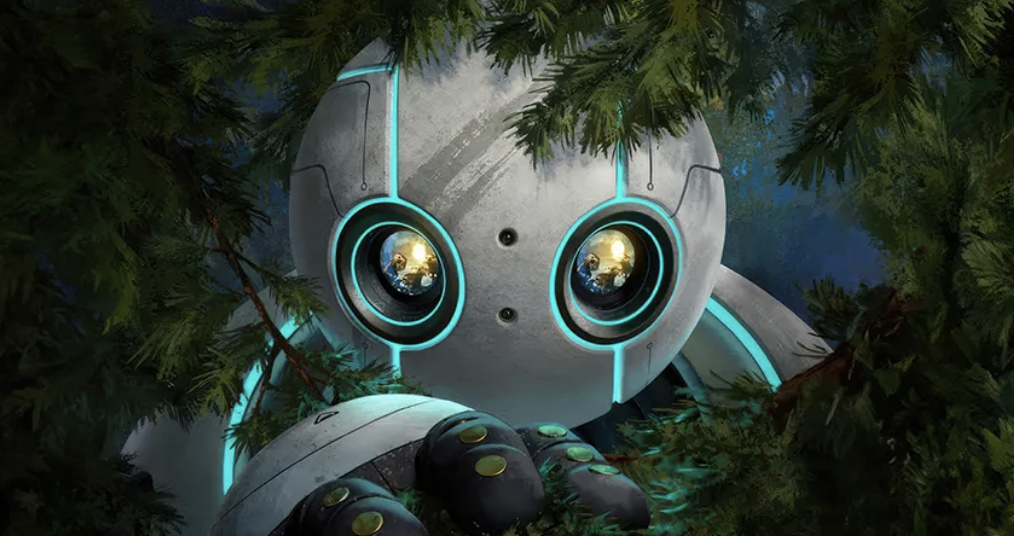
(Cover Image: Credit to Roz from “The Wild Robot”)
Bryan Bravo
Co-Founder | 996 Ventures
https://996ventures.com/