PinnedFoundry·July 13, 2026
Foundry and ScottyLabs
Why ScottyLabs runs Foundry.
by Theo Urban·1 min read
The blog
Essays, reflections, and lessons from inside the accelerator.
Why ScottyLabs runs Foundry.
A look into 996 Ventures: Documenting the Obsessed Few
A learning document from the first year of ScottyLabs Foundry
Carnegie Mellon's premier startup accelerator for serious founders.
Carnegie Mellon's First Student-Led Startup Accelerator.

AI is now. Robotics is next.
The most honest benchmark for a frontier model is not a test score. It is what one person can ship in a day.
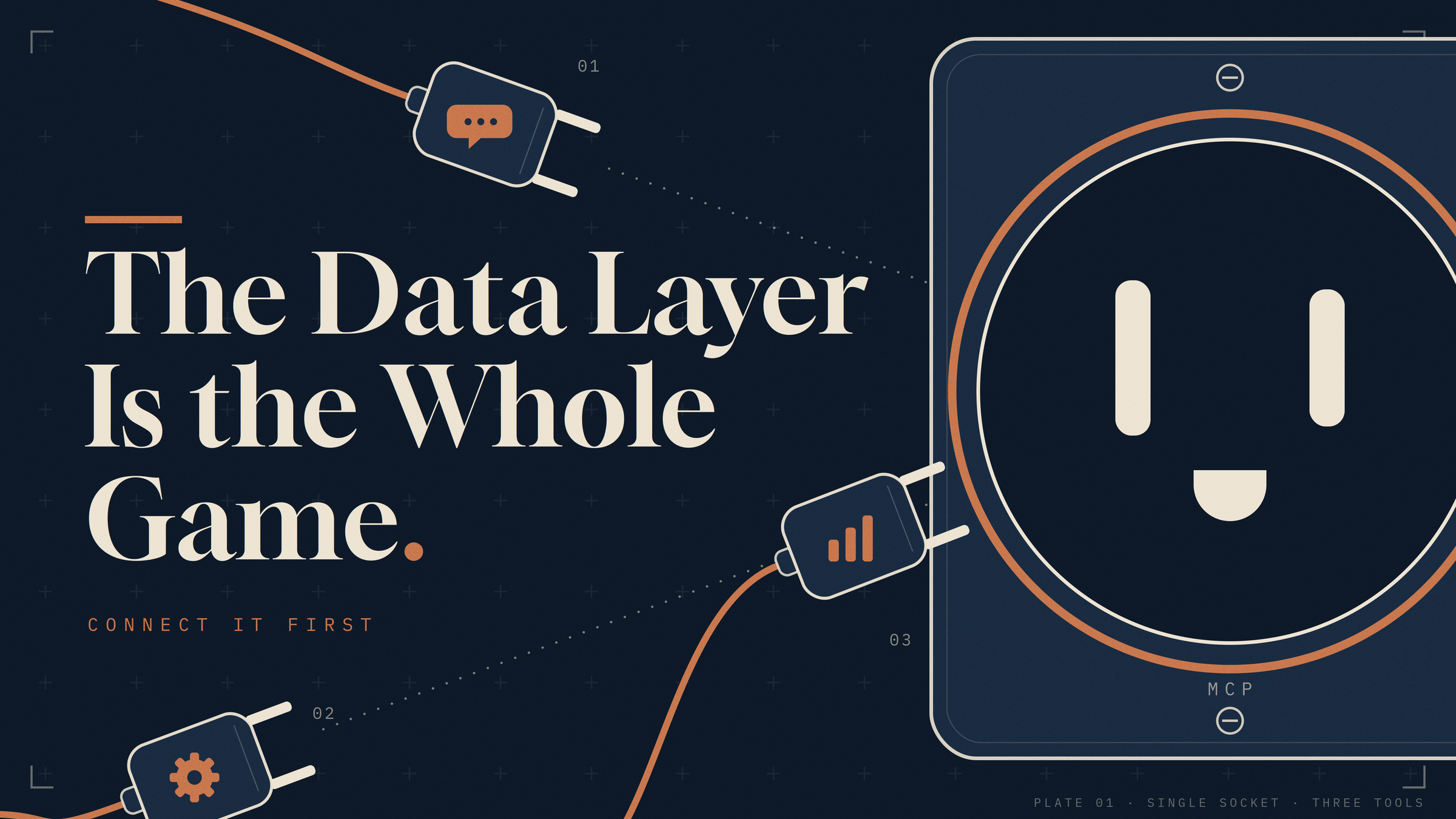
Every business sitting on rich data is one good decision away from making it useful. The decision is to connect it first.
A learning document from the first year of ScottyLabs Foundry
Pittsburgh · July 2026
Two cohorts in, the evidence reads clean: our results track our selectivity almost one for one. So we are returning to our sharpest configuration. Up to seven teams per cohort, fewer if seven don't clear the bar, selected by a leadership team built for the hunt. The accelerator gets smaller, leaner, and more promising on a per-founder basis. The community around it gets bigger. Our supporters get the version of Foundry that earned their attention in the first place.
Cohort 1 was nearly dead-on. We admitted only founders we would stake our own names on, and the market agreed with us fast: $1.55M raised within four months, Haladir now backed by Y Combinator with $4.3M raised to date, another team incorporated and building full time in San Francisco, now in stealth. When every admit is a team we can defend without caveats, our word to a venture partner means something, and capital moves at the speed of that trust.
In Cohort 2 we widened the aperture, and we regressed. Let us be precise about what regressed. The founders were serious people, and we enjoyed working with every single one of them. But on average the businesses were weaker, our conviction per team was thinner, and the difference showed. That regression was ours, not theirs. When you admit more, you believe less, team by team. Attention divides, the signal blurs, and the accelerator drifts toward being a program instead of a position.
The lesson is not that Carnegie Mellon has a shortage of talent. It has the deepest technical founder pool in the country. The lesson is that our edge was never throughput. It is judgment, and judgment does not scale by headcount.
Foundry is not tenable as the elite accelerator for the most promising founder talent at CMU today, not tomorrow, unless every team we put forward is actually the best, a cut above exceptional. Our entire product is a single claim, made in good faith to people who allocate real capital: this one. That sentence only carries weight if it is scarce. Every marginal admit taxes the signal of every other team we stand behind. At up to seven, our conviction is a stake. Past that, it is a list.
We are a meritocracy first and foremost, and we play the brutal game that follows from it: go after the absolute best, and do not deal with the rest inside the core accelerator. The bar stays exactly where it produced Cohort 1. Founders spending 30+ hours a week on the company. A clear thesis, a working product or real revenue, growth at a venture-scale rate. Undergraduates through faculty. Our founders drop out or build very serious businesses, and we would not have it any other way.
Seven is a ceiling, not a quota. If four teams clear the bar, we take four. Selection is the whole game, and we would rather run a smaller forge than a cooler one.
The core accelerator tightens. Cohort 3 admits up to seven teams, selected by a leadership bench I am building specifically for offensive sourcing: people who walk the labs, the hackathons, and the faculty corridors and get to the best builders before anyone knows they are founders.
The community widens. Our talent team will host events for the broader CMU founder community, fireside chats with top venture firms, open sessions, the works. The front door stays open to everyone building something real. Rigor at the core, generosity at the edges. The two are not in tension; the events are where we find the next seven.
Nothing else about our terms changes. No equity, no fees. The only thing Foundry trades on is judgment.
To the venture partners and corporate supporters who have bet on us: this is the moment to double down. A Foundry that is more ruthless about its core cohort is a Foundry whose signal is worth more to you, whose first look means more, and whose teams arrive pre-cleared by a filter that says no far more often than yes. Cohort 1 showed what the concentrated version of this machine produces. Cohort 3 is that machine with a stronger leadership team behind it.
We ran the experiment both ways. We are keeping the version that works. The rigorous core is back, and the best is ahead.
Thomas Kanz
General Partner, ScottyLabs Foundry
[email protected] · foundry.scottylabs.org